
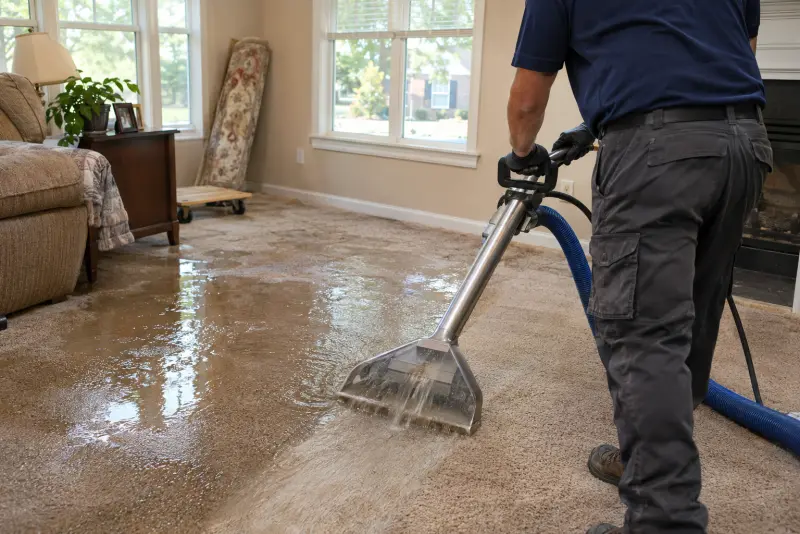
Emergency Water Extraction
Standing water removed before it reaches drywall, trim and stored belongings.
Get help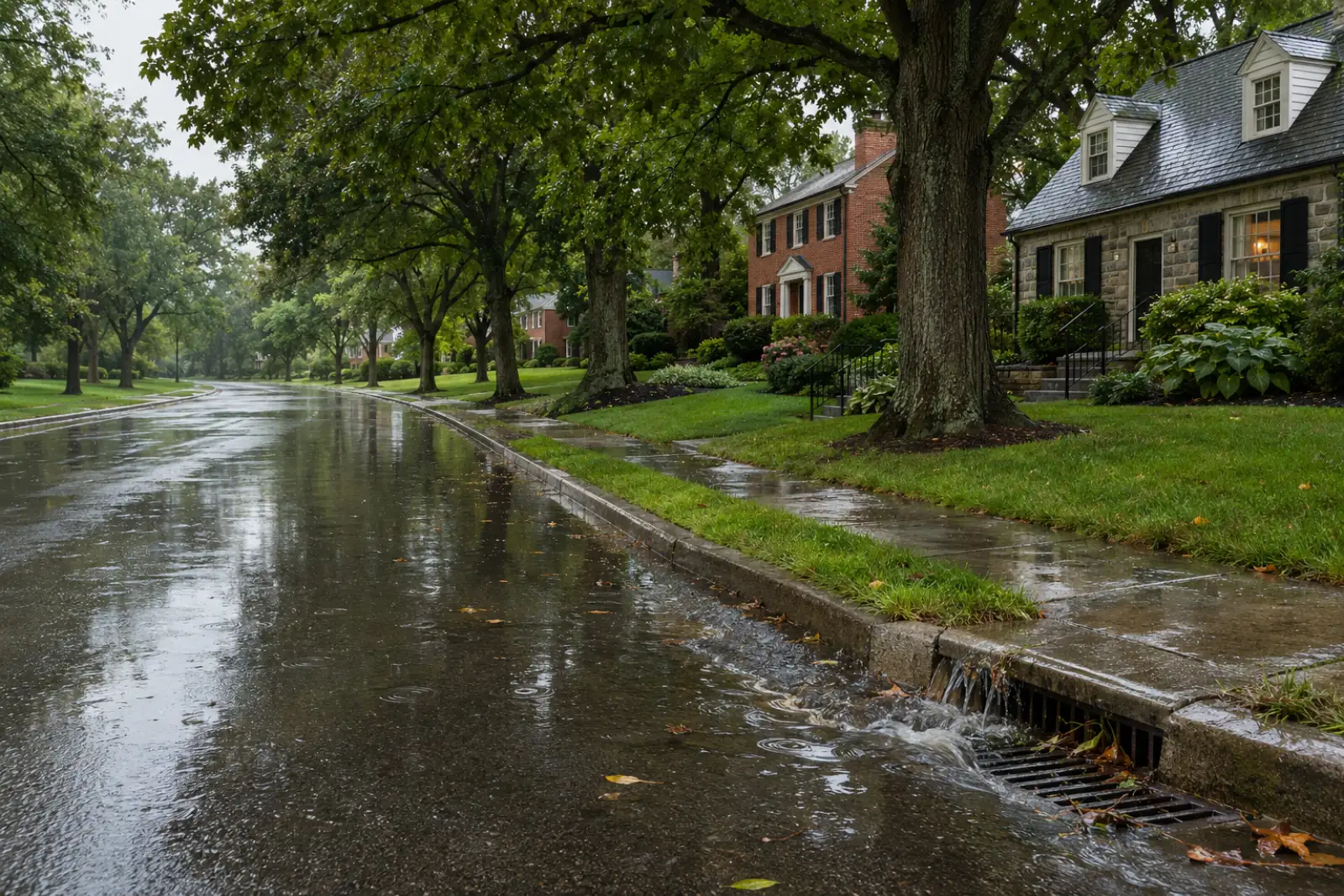
Marietta mixes historic homes near the Square with decades of East Cobb subdivisions. Each era has its own way of letting water in.
Call (470) 555-0100 Or see how to reach dispatch. Calls are answered 24/7.Marietta is the Cobb County seat, with the historic Square and Whitlock Avenue at its center, older neighborhoods radiating out from downtown and large East Cobb subdivisions toward Sandy Plains and Johnson Ferry. The housing runs from early 20th-century bungalows and Victorians to 1970s and 1980s split-levels and newer infill.
Older homes near the Square often still have cast iron drains, galvanized supply lines and clay sewer laterals under mature oaks. Those fail inside walls, under floors and at the cleanout. East Cobb split-levels add finished lower levels, aging water heaters and polybutylene supply line.
Topography matters too. Lots graded toward Sope Creek, Rottenwood Creek and the smaller streams across the city hold water in red clay after storms, and that water finds the lowest wall of the house.
The same four failures account for most of the calls we run in Marietta.
Original galvanized steel supply lines corrode internally. The first sign is low pressure at a fixture; the next is a pinhole leak inside a wall or under a floor. Repairs often reveal more thin pipe nearby.
Cast iron waste lines scale down to a fraction of their original diameter. Roots enter at joints, paper catches on the scale, and a backup appears at the lowest drain in the house.
Marietta's oaks and pines are beautiful and hard on clay sewer laterals. Roots follow condensation into hairline cracks, then grow into a mat that catches solids.
Older neighborhoods were graded before modern stormwater rules. Downspouts discharge near foundations, patios settle toward the house, and crawlspaces fill during heavy rain.
A wet lower level is a symptom. The useful question is whether the water came through the foundation, up from a drain or down from a pipe. The answer changes the cleanup and the repair.
The same crew handles extraction, drying, contamination cleanup and the repair.
Standing water removed before it reaches drywall, trim and stored belongings.
Get help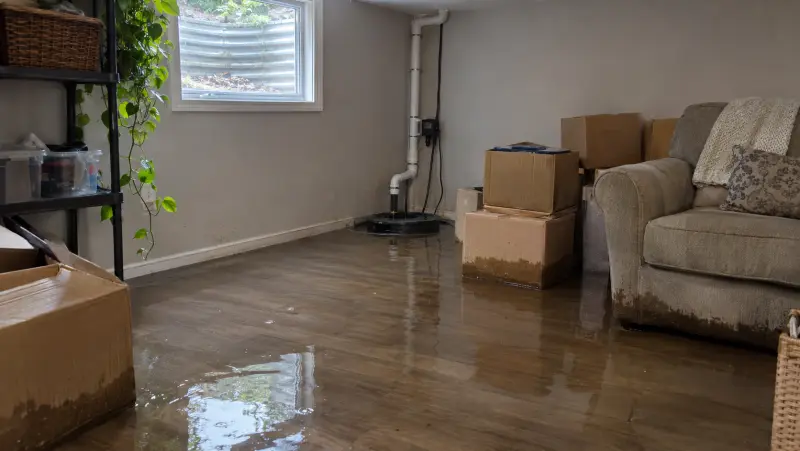
Hillside basements, wet crawlspaces and storm runoff against the foundation.
Get help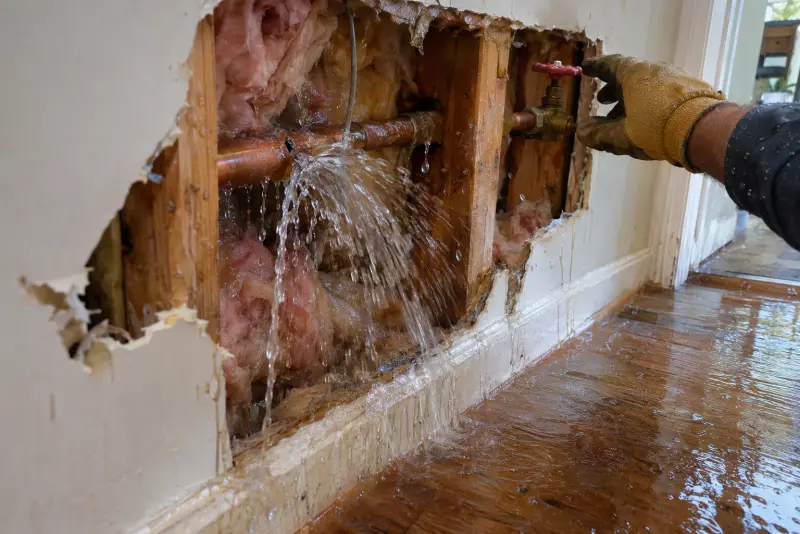
Hard-freeze splits, hidden wall leaks and ceiling stains traced to the source.
Get help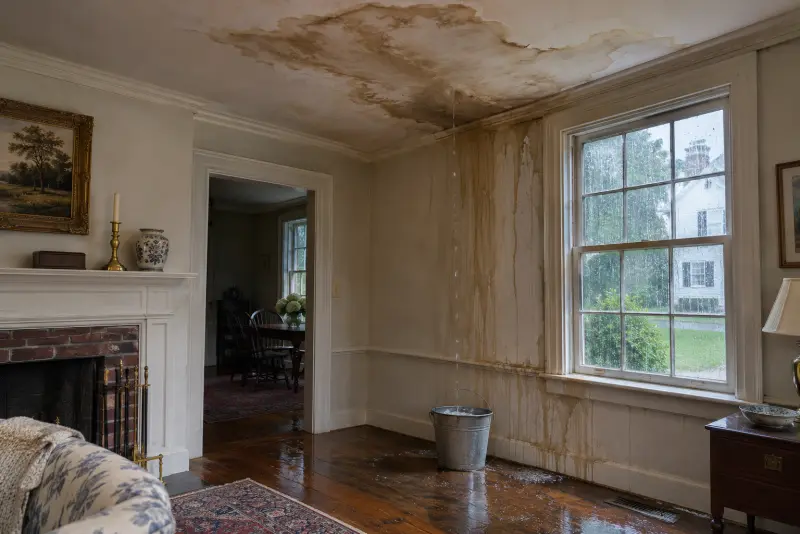
Wind-driven rain, fallen limbs and ceiling leaks after a north Georgia thunderstorm.
Get help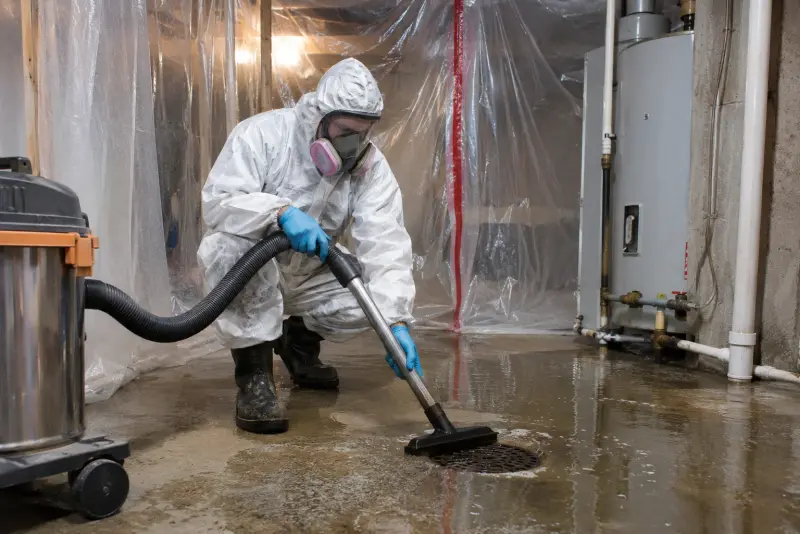
Contaminated water handled with containment, PPE and proper disinfection.
Get help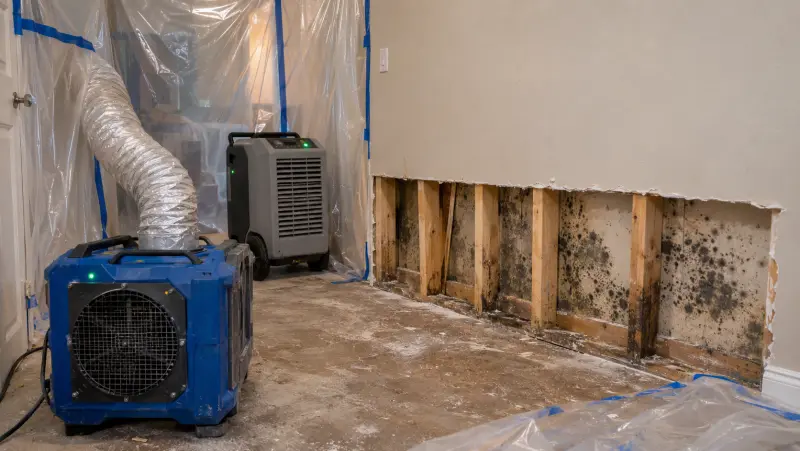
Containment, HEPA filtration and repairs after the structure is dry.
Get helpLocal knowledge matters when the housing stock changes block by block.
30060 · Historic homes and storefronts. Cast iron drains, clay laterals and older roof systems.
30064 · Established homes under a mature tree canopy. Root intrusion, crawlspaces and roof leaks.
30062 · Split-levels and traditionals with finished basements. Water heaters, sump pumps and polybutylene.
30066 · 1980s and 1990s subdivisions. Attic condensate leaks, supply-line failures and slab moisture.
30068 · Larger homes on sloped lots. Hillside basement seepage and gutter overflow.
30067 · Apartments and commercial buildings. Shared plumbing stacks and sprinkler-line breaks.
These are the signs that usually justify a moisture inspection rather than a wait-and-see approach.
Send a photo or describe what changed. We will tell you whether it needs a visit today.
Call now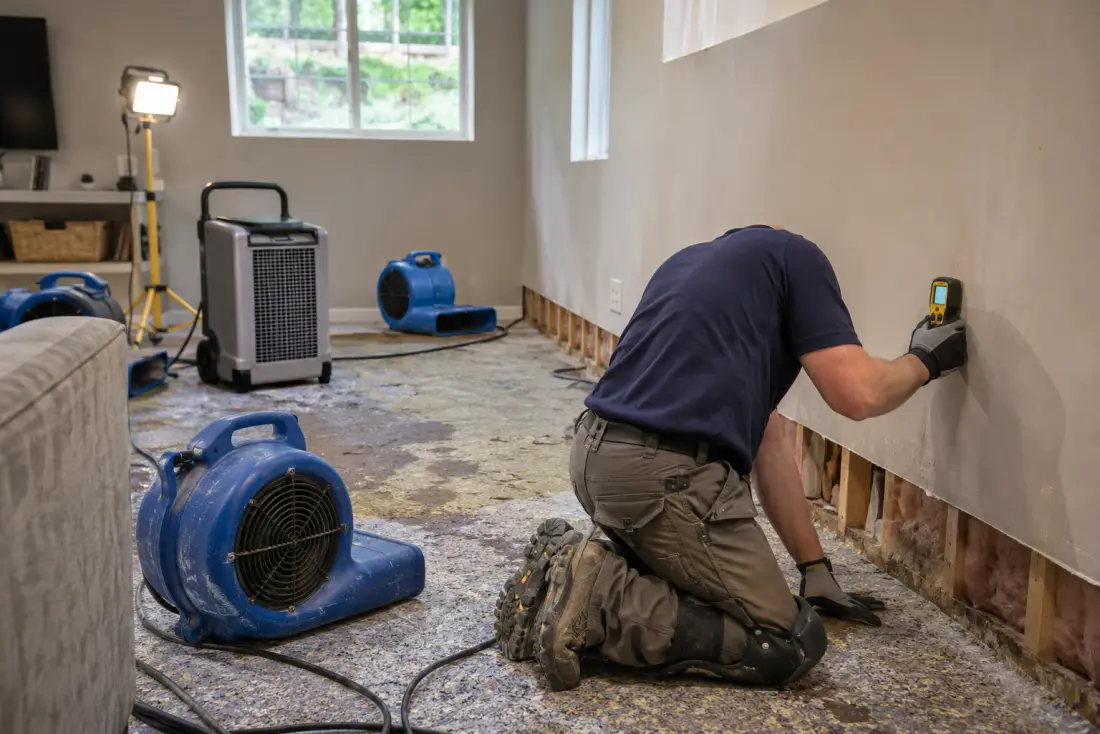
No mystery, no pressure. Here is the sequence from the first call to the final reading.
We confirm the address, the source and whether the water is contaminated. You get safety guidance before the crew leaves.
Moisture meters and thermal imaging map the affected area. We photograph materials and record readings.
Standing water is extracted. Saturated carpet, pad and material that cannot dry in place are removed and documented.
Equipment is sized to the space and checked daily. Drying continues until readings meet the dry standard.
Drywall, trim, flooring and paint are scoped after drying and insurance review.
We reach Marietta from I-75 and Loop 120 for the Square and Whitlock Avenue, and along Roswell Road and Sandy Plains Road for East Cobb. That covers the historic core and the eastern subdivisions without a long approach.
Historic homes near the Square may have plaster walls, original hardwood and preservation concerns. Tell dispatch, and we will plan drying to protect original materials where possible.
Use the map link for the general area. For a crew response, call and give the exact address, gate code and any access notes.
Open area mapLocal answers, not a national script.
Yes, and it is category 3 contaminated water. The cleanup is more involved than a clean supply-line leak because porous materials that contacted the sewage usually have to be removed and the hard surfaces disinfected.
Often. Plaster and old-growth hardwood respond well to controlled drying when the response is fast. We monitor closely to avoid over-drying, which can crack plaster and split boards.
That is a plumbing decision, not a restoration one. A licensed plumber can assess the condition. From our side, we document every wet area so a partial repair does not leave saturated material behind.
Stop using water in the house, including the washing machine and dishwasher. Do not pour chemicals into the drain. Call a plumber for the blockage and call us if sewage reached the floor.
Request service
Call for active water, estimates, scheduling and questions. If water is near outlets, a panel or a gas appliance, leave the area and call from a safe place.
One call gets you shutoff guidance, an arrival window and a plan for Marietta. Have your address and any insurance claim number ready.
Call (470) 555-0100Tap to call from your phone.
Call now. We will tell you what to shut off, what to move and what to leave alone until the crew arrives.
Call (470) 555-0100